The ancient city of Akrotiri on Santorini offers one of the very clear glimpses into Bronze Age life. Preserved beneath volcanic ash, its wall paintings provide more than artistic beauty. They open a window into how people lived, what they valued, and how they understood their world. In Art, Religion, and Ideology in the West House Paintings of Thera (Santorini) by Nanno Marinatos, these frescoes are examined not as decoration, but as a visual record of a complex and structured society.
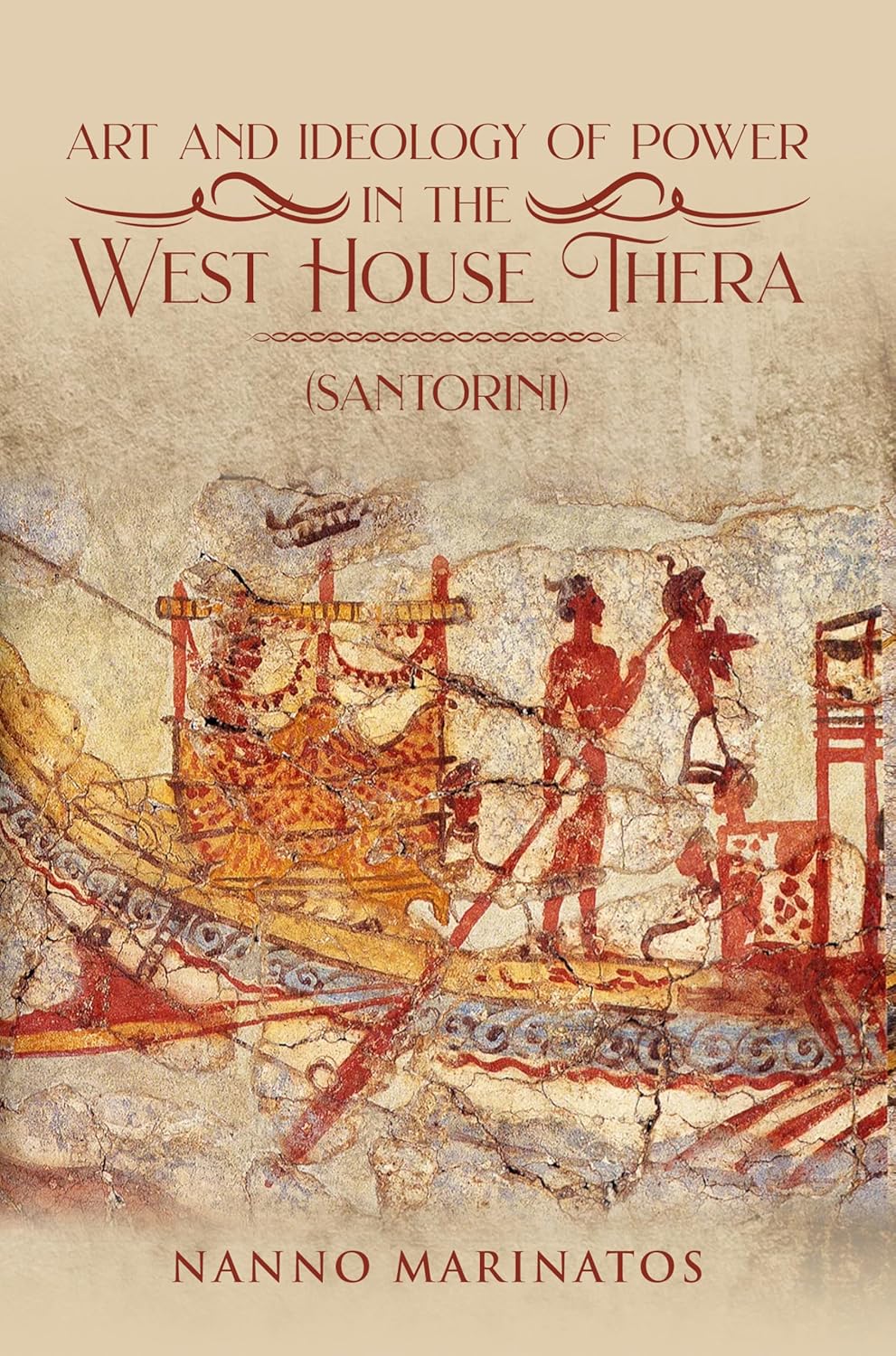
One of the most differing aspects revealed through these paintings is the importance of the sea. Ships dominate several scenes, moving in coordinated formations that suggest organization and purpose. This was clearly a society deeply connected to maritime activity. The sea was not simply a source of trade or travel. It was central to identity, shaping both economic life and cultural expression.
The presence of detailed ship scenes also indicates a high level of craftsmanship and technological understanding. These vessels are not abstract representations. They are carefully constructed images that reflect real knowledge of naval design and movement. This attention to detail suggests a society that valued skill, precision, and creativity.
Beyond the sea, the frescoes reveal a vibrant social structure. Figures are shown in processions, ceremonies, and daily activities. These are not isolated individuals. They are part of a coordinated community, engaged in shared practices. The repetition of similar placements and arrangements points to established rituals and social norms.
Clothing and adornment offer further insight into prehistoric life. Clothes are seen with care, showing patterns, colors, and styles that likely carried social meaning. Jewelry appears often, indicating both aesthetic appreciation and status. These details suggest a society that placed importance on appearance, identity, and distinction within a social ladder.
Nature also plays a significant role in the pictorial proof. Flowers, animals, and landscapes are embedded into many scenes, reflecting a close relationship with the natural environment. This is not a background element. It is part of the narrative. The inclusion of plants such as crocus flowers points to an awareness of seasonal cycles and possibly ritual practices connected to nature.
The frescoes also highlight the role of ritual and belief. Certain figures appear in settings that suggest ceremonial importance, surrounded by symbolic elements. These scenes indicate that spiritual life was woven into daily existence. Religion was not exclusive of the society. It was embedded within it, influencing how people understood power, community, and the natural world.
Another revealing aspect is the portrayal of hierarchy. Some figures are positioned prominently, elevated or distinguished by their surroundings. This suggests a structured society where status was recognized and displayed. Leadership and authority were visible, not only through actions but through placement and symbolism within the visual narrative.
Women, in particular, appear in roles that are both visible and significant. They are not confined to the background. They participate in key moments, suggesting that their presence was integral to social and possibly ceremonial life. Their perception adds depth to our understanding of gender roles in this society.
Art, Religion, and Ideology in the West House Paintings of Thera (Santorini) brings these elements into focus with clarity and depth. It guides the reader through the layers of meaning embedded in the frescoes, revealing how art can serve as a powerful record of human experience.
Through these paintings, ancient life in Santorini becomes tangible. We see a society shaped by the sea, enriched by art, structured by hierarchy, and connected through shared beliefs. It is a world that continues to speak across time, offering insight into how people once lived, thought, and expressed their place within a larger order.
Available now on Amazon: https://www.amazon.com/dp/B0GGKK64DM/